So much talk around leadership breakthroughs too often focuses on authority, innovation, or profit. But some of the most powerful breakthroughs in history came from a very different place.
These leaders didn’t lead by command or capital. They led by emphasizing human dignity, care, and community at the center of change and success. Their impact reminds us that real breakthroughs don’t start with systems — they start with people.
Human-Centered Systems Change
Redesigning systems around people, not processes.
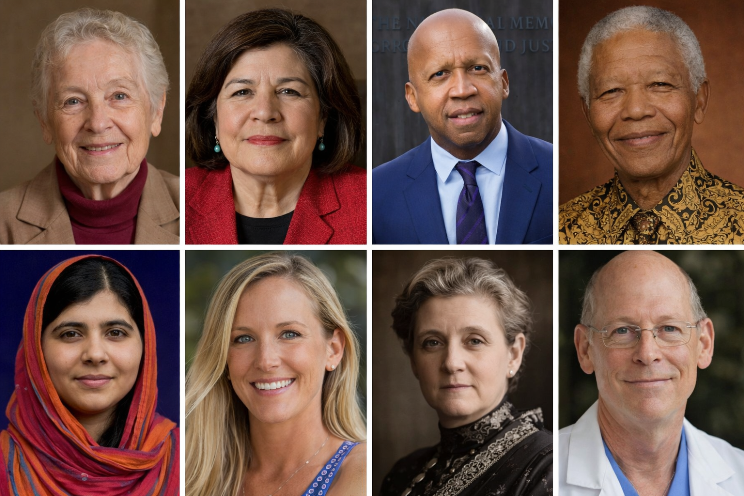
Dr. Audrey Evans saw something most healthcare systems overlooked: when a child is sick, the entire family is affected. Her breakthrough resulted in the creation of the first Ronald McDonald House, redefining healthcare to support families, not just patients. The shift: Healing is holistic
Wilma Mankiller reframed tribal leadership by focusing on community empowerment. Under her leadership, the Cherokee Nation advanced housing, healthcare, and education — not through centralized power, but shared responsibility. The shift: Leadership as shared strength, not control.
Dignity, Equity & Justice Through Service
Confronting injustice by restoring dignity and expanding access.
Bryan Stevenson built the Equal Justice Initiative to challenge mass incarceration, racial bias, and wrongful convictions. His leadership breakthrough wasn’t loud or punitive — it was rooted in proximity, truth, and mercy. The shift: Justice begins with seeing people fully.
Nelson Mandela led one of the most remarkable transitions in modern history. Rather than seeking revenge after apartheid, he chose reconciliation — using forgiveness as a stabilizing force for a divided nation. The shift: Compassion as a nation-building strategy.
Courageous Compassion in the Face of Harm
Transforming personal pain into purpose.
Malala Yousafzai turned an assassination attempt into a global movement for girls’ education. Her leadership breakthrough wasn’t driven by anger, but by clarity and courage. The shift: Moral strength without bitterness.
Bethany Hamilton returned to elite competition after losing her arm in a shark attack. Her story became a global symbol of resilience — not because she ignored adversity, but because she redefined what strength looks like. The shift: Ability is defined by spirit, not circumstance.
Service as Leadership — Not Charity
Empowering communities instead of positioning oneself as a savior.
Jane Addams founded Hull House and lived alongside the communities she served. Her leadership rejected distance and hierarchy in favor of proximity and partnership. The shift: Service with people, not for people.
Paul Farmer co-founded Partners In Health, delivering world-class healthcare in some of the poorest regions of the world. He challenged the idea that poverty excuses lower standards of care. The shift: Charity treats symptoms; systems-level service restores dignity and outcomes.
The Breakthrough Insight
These leaders show us that compassion isn’t a soft skill. It’s a strategic force. Breakthrough leadership doesn’t always arrive with titles, capital, or authority. Sometimes it arrives with presence, empathy, and the courage to put people first — even when systems resist.
The question for all of us: Where might a breakthrough be waiting if dignity led the way?