Over the years, I’ve ridden thousands of miles across America. I’ve crossed deserts, climbed mountain passes, battled thunderstorms, navigated construction zones, and experienced stretches of open highway where everything seemed to flow perfectly.
The more time I’ve spent leading organizations, facilitating teams, and helping leaders navigate challenges, the more I’ve realized something surprising:
Motorcycling and management have a lot in common.
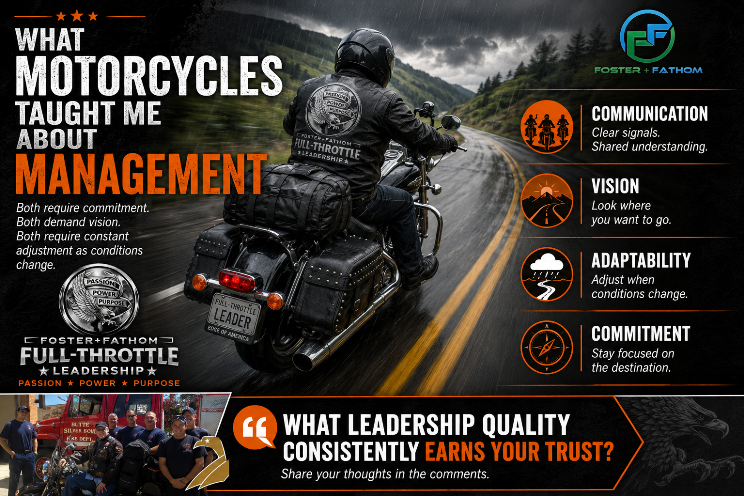
Both require commitment. Both demand vision. Both require constant adjustment as conditions change. And in both, communication can mean the difference between success and disaster.
Communication Isn’t Optional
When you’re riding in a group, communication isn’t just “nice-to-have.” It’s essential.
Riders use hand signals, lane positioning, eye contact, pre-ride briefings, and agreed-upon expectations to keep everyone moving safely and efficiently. The best riding groups don’t leave communication to chance.
Everyone knows the route. Everyone understands the plan. Everyone knows what to do when conditions change.
Leadership works exactly the same way.
Too often, organizations assume communication has occurred simply because information was sent. An email was distributed. A meeting was held. A presentation was delivered.
But communication isn’t measured by what was said. Its measured by what was understood.
The most effective leaders understand that clarity beats volume every time.
Keep Your Eyes Up
One of the first lessons every rider learns is to look where you want to go.
If you focus on the pothole, you’ll likely hit it. If you focus on the guardrail, you’ll drift toward it.
Your motorcycle naturally follows your vision. Organizations do the same thing.
Teams take their cues from leadership. If leaders spend all their time focused on obstacles, problems, and fears, the organization tends to move in that direction.
Strong leaders acknowledge challenges but keep their eyes focused on the destination. People need to know where they’re headed before they can help get there.
Conditions Change
No rider starts a trip expecting every mile to be perfect.
Obstacles appears. Weather shifts. Traffic backs up. Detours happen. Good riders don’t panic when conditions change. They adjust.
The same principle applies to leadership. Markets change. Employees leave. Priorities shift. Unexpected challenges emerge.
The leaders who thrive aren’t necessarily the ones with the best plan. They’re often the ones who adapt the fastest while remaining committed to the destination.
Commitment Matters
Every rider knows there comes a point when turning around is harder than moving forward.
Leadership has those moments too.
There are days when the road is long, the weather is ugly, and the destination seems a long way off. That’s when commitment matters most. Not commitment to comfort or convenience. Commitment to the mission.
The best leaders understand that success isn’t built during the easy miles. It’s built when challenges test their resolve.
Full-Throttle Leadership
During my 13,000-mile motorcycle journey around the perimeter of the United States in 2013, I learned countless lessons about leadership. But perhaps the most important was this:
Leadership isn’t about controlling every mile of the journey. It’s about maintaining vision, communicating clearly, adjusting when conditions change, and staying committed to the road ahead.
Whether you’re leading a team, an organization, or your own life, the principles remain the same.
Keep your eyes up. Communicate clearly. Adjust as needed. And never lose sight of where you’re headed.
Because both motorcycles and leadership have a way of taking you exactly where you’re looking.
Question of the Month
Think about the best leader you’ve ever worked for or with.
What leadership quality did they consistently demonstrate that earned your trust and inspired you to follow their lead?
Share your thoughts in the comments. I’d love to hear what leadership lessons have made the biggest impact on your journey.